Korchek et al: Association of fracture gap with implant failure in radius and ulna fractures in toy breed dogs—A multicenter retrospective cohort study
Veterinary Surgery 2, 2025

šŸ” Key Findings

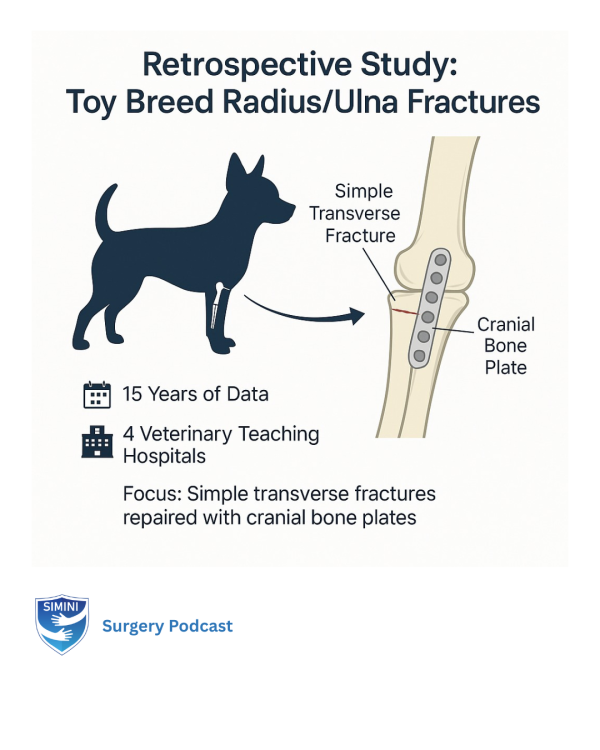
80 toy breed dogs with surgically repaired transverse radius/ulna fractures were analyzed.
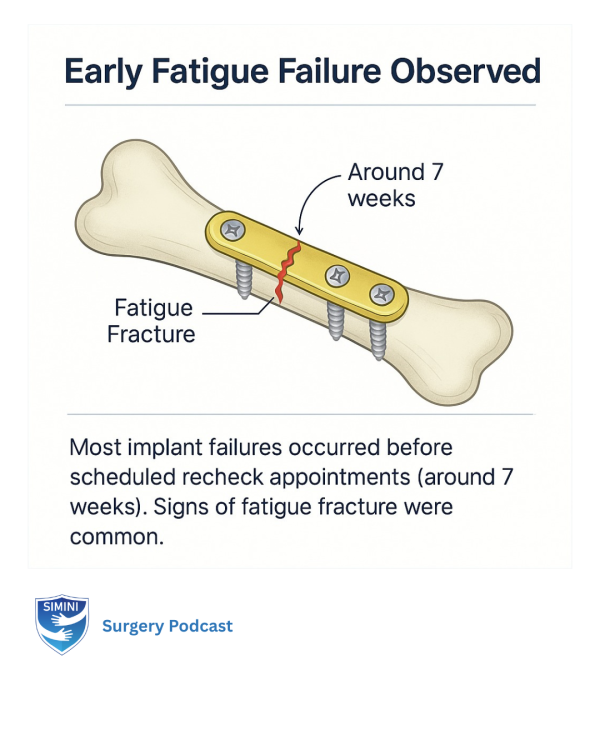
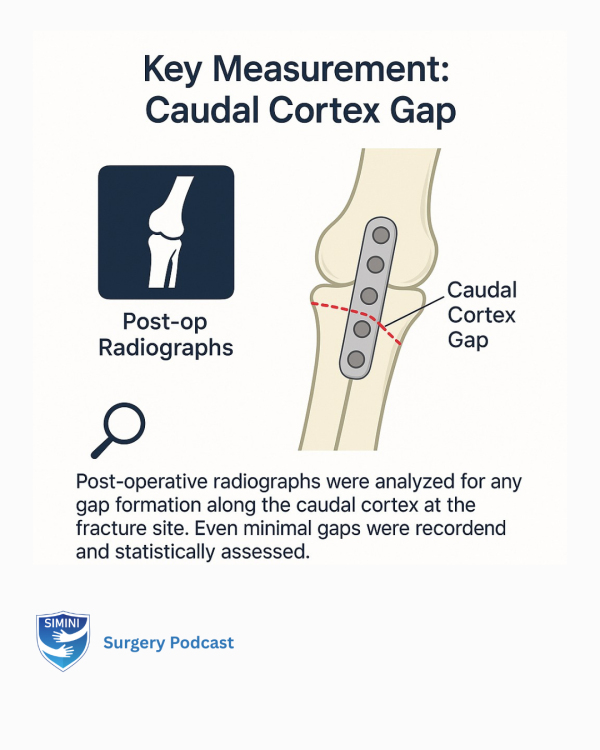
Fracture gap in the caudal cortex was present in 46% of cases.
Implant failure rate:

  • 27% in cases with fracture gap
  • 2% in cases without fracture gap

Fracture gap significantly associated with implant failure:

  • OR = 23.0, 95% CI: 2.7–197.9, p = 0.004

Absence of external coaptation also associated with increased implant failure risk:

  • OR = 10.1, 95% CI: 1.1–89.6, p = 0.04

Prolonged external coaptation (>1 week) linked to non-implant complications (skin wounds, osteopenia, osteomyelitis):

  • OR = 5.4, p = 0.04

Plate thickness, type, open screw holes, and working length were not statistically significant predictors of implant failure after multivariable analysis.
Association of fracture gap with implant failure in radius and ulna fractures in toy breed dogs—A multicenter retrospective cohort study

Simini Surgery Review Podcast

How critical is this paper for crushing the Boards?

🚨 Must-know. I’d bet on seeing this.

šŸ“š Useful background, not must-know.

šŸ’¤ Skip it. Doubt it’ll ever show up.

Thanks for the feedback!
ā€
We'll keep fine-tuning the articles vault.
Oops — didn’t go through.
ā€
Mind trying that again?

Korchek et al: Association of fracture gap with implant failure in radius and ulna fractures in toy breed dogs—A multicenter retrospective cohort study
Veterinary Surgery 2, 2025

šŸ” Key Findings

80 toy breed dogs with surgically repaired transverse radius/ulna fractures were analyzed.
Fracture gap in the caudal cortex was present in 46% of cases.
Implant failure rate:

  • 27% in cases with fracture gap
  • 2% in cases without fracture gap

Fracture gap significantly associated with implant failure:

  • OR = 23.0, 95% CI: 2.7–197.9, p = 0.004

Absence of external coaptation also associated with increased implant failure risk:

  • OR = 10.1, 95% CI: 1.1–89.6, p = 0.04

Prolonged external coaptation (>1 week) linked to non-implant complications (skin wounds, osteopenia, osteomyelitis):

  • OR = 5.4, p = 0.04

Plate thickness, type, open screw holes, and working length were not statistically significant predictors of implant failure after multivariable analysis.

Simini Surgery Review Podcast

Join Now to Access Key Summaries to more Veterinary Surgery Articles!

Multiple Choice Questions on this study

In Korchek 2025 et al., on fracture gap risk, how did absence of external coaptation affect implant failure risk?

A. It reduced the likelihood of complications
B. It confounded the association between implant type and failure
C. It was protective against implant failure
D. It increased the risk of implant failure
E. It had no measurable effect

Answer: It increased the risk of implant failure

Explanation: Absence of external coaptation was significantly associated with implant failure (OR = 10.1, p = .04).
In Korchek 2025 et al., on fracture gap risk, what effect did prolonged external coaptation (>1 week) have on outcomes?

A. It significantly reduced implant failure rates
B. It had no statistically significant impact
C. It was significantly associated with major and minor non-implant complications
D. It increased implant stiffness
E. It improved cortical alignment

Answer: It was significantly associated with major and minor non-implant complications

Explanation: Prolonged external coaptation was associated with bandage-related complications such as skin wounds and osteopenia (OR = 5.4, p = .04).
In Korchek 2025 et al., on fracture gap risk, which postoperative finding was most strongly associated with implant failure in toy breed dogs with radius/ulna fractures?

A. Presence of a fracture gap in the cranial cortex
B. Presence of a fracture gap in the caudal cortex
C. Use of a locking compression plate
D. Increased working length of the plate
E. Use of external coaptation for >1 week

Answer: Presence of a fracture gap in the caudal cortex

Explanation: Implant failure was significantly associated with a postoperative fracture gap in the caudal cortex, with an OR of 23.0 and p = .004.
In Korchek 2025 et al., on fracture gap risk, which implant variable was NOT significantly associated with implant failure in multivariable analysis?

A. Use of locking plate only
B. Open screw holes at fracture site
C. Plate thickness <1.2 mm
D. Working length of 7–28 mm
E. All of the above

Answer: All of the above

Explanation: None of these implant-related variables showed a significant independent association with implant failure in multivariable analysis.
In Korchek 2025 et al., on fracture gap risk, what was the incidence of implant failure among cases with a fracture gap?

A. 2%
B. 7%
C. 14%
D. 20%
E. 27%

Answer: 27%

Explanation: Among the 37 cases with a fracture gap, 10 experienced implant failure, corresponding to a 27% failure rate.

Elevate Your Infection Control Protocol

Implement Simini Protect Lavage for superior, clinically-proven post-operative skin antisepsis and reduced infection risk.